
NEWS
Outcry erupts over reports of possible ICE presence at polling places ahead of midterms, with critics warning it could intimidate voters and spark major legal challenges over election integrity and rights.

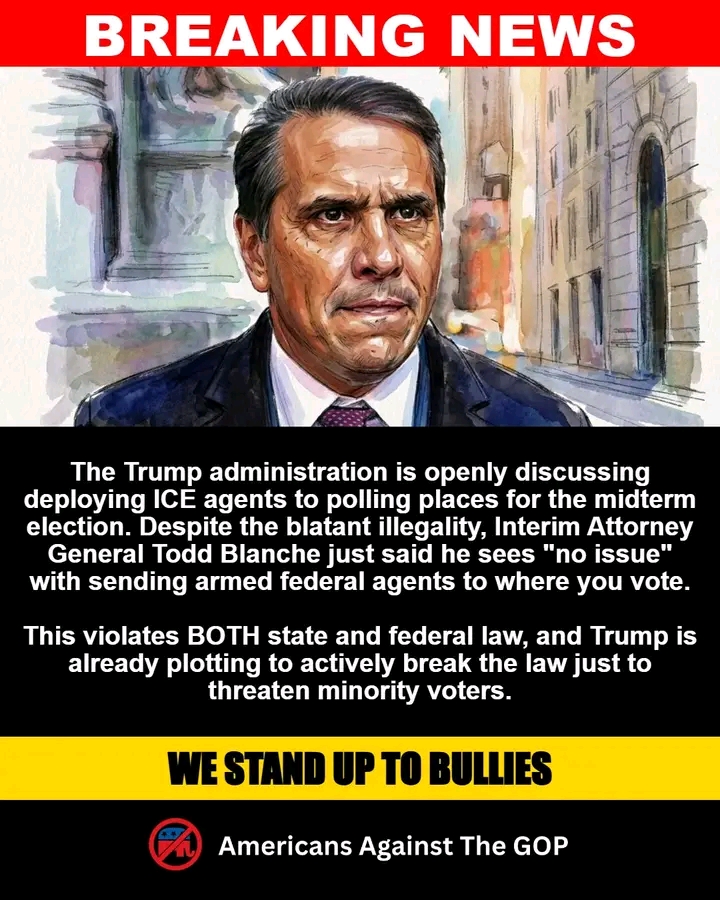
ILLEGITIMI NON CARBORUNDUM: Growing Alarm Over Talk of ICE Presence at Polling Places
A political firestorm is erupting after reports that figures connected to the Trump administration are discussing the potential deployment of ICE agents near polling places during the upcoming midterm elections.
Civil rights advocates, voting rights organizations, and legal scholars are warning that even the suggestion of armed federal immigration agents around voting sites could create a chilling effect on voter participation across the country.
The controversy intensified after Interim Attorney General Todd Blanche reportedly stated he saw “no issue” with ICE agents being present near election locations. Critics immediately responded that such actions could violate long-standing protections designed to prevent voter intimidation and preserve the integrity of elections.
Federal law already prohibits intimidation, coercion, or threats against voters. Many states also have strict restrictions regarding armed individuals or law enforcement presence near polling locations unless specifically authorized for emergencies. Legal experts argue that deploying immigration enforcement officers near voting sites could disproportionately affect immigrant communities and minority voters, creating fear that discourages lawful participation in elections.
Voting rights groups say the issue is not theoretical. Throughout American history, intimidation tactics have often been used to suppress turnout among vulnerable populations.
From literacy tests and poll taxes to physical intimidation during the Civil Rights era, critics say democracy suffers when citizens fear consequences for exercising their constitutional rights.
Supporters of stronger election security argue that law enforcement visibility can help prevent disruptions and maintain order.
However, opponents counter that polling locations are already governed by election officials and local procedures, making federal immigration enforcement both unnecessary and politically charged.
Civil liberties organizations are now preparing for possible legal battles should any effort move forward. Several advocacy groups have stated they would immediately challenge any federal deployment that could interfere with access to the ballot box.
The debate arrives at a moment of intense national polarization, with public trust in elections already under pressure. For many Americans, the concern extends beyond one administration or one election cycle. The larger question is whether democratic participation can remain free from fear, intimidation, and political pressure.
As the midterms approach, activists across the political spectrum are urging voters to remain informed, know their rights, and participate peacefully in the democratic process. The outcome of the debate may shape not only the next election, but the future boundaries between federal power and voting rights in America.

Gas prices rise as questions mount over transportation leadership priorities, sparking public debate on focus, accountability, and whether officials are fully engaged in managing America’s critical infrastructure systems effectively today.

Outcry erupts over reports of possible ICE presence at polling places ahead of midterms, with critics warning it could intimidate voters and spark major legal challenges over election integrity and rights.

Federal judges dealt Trump two major defeats, blocking controversial tariffs and grant terminations, intensifying the national battle over executive power, constitutional limits, and the future of democracy before November’s election.

ONE LAST HOLY WAR FOR THE HEART OF COUNTRY MUSIC”: THE SEVEN GREATEST LEGENDS — WILLIE NELSON, DOLLY PARTON, GEORGE STRAIT, ALAN JACKSON, BLAKE SHELTON, LUKE BRYAN & TRACE ADKINS — UNITE IN A PASSIONATE, SOUL-SHAKING FIGHT TO PROTECT THE DYING SPIRIT OF TRADITIONAL COUNTRY

🚨 Texas ignites nationwide controversy after Governor Abbott signs sweeping measures targeting extremist-linked religious compounds and land control, sparking fierce debate over national security, constitutional rights, religious freedom, and America’s political future.
THE NEW WORLD ORDER — U.S. Moves to Withdraw 100,000 Troops from Europe and Halt Trillions in Defense

🚨 Fictional War Scenario “Chaos on the Frontline” Depicting 15,000 American Troops Surrendering Triggers Intense Debate Online Over Military Readiness, Cyber Warfare, Leadership Failures, and the Future of Modern Combat 🚨

THE ULTIMATE FINAL WAR FOR THE SOUL OF COUNTRY MUSIC: IN A HISTORY-MAKING MOMENT

🚨 Former Officials Sound Alarm Over Emergency Powers as Fears Grow That Hidden Executive Orders Could Reshape American Democracy and Expand Presidential Authority Beyond Constitutional Limits

🚨 Texas Sparks National Outrage After Governor Abbott Signs Explosive New Law on Land Ownership and “Parallel Societies,” Triggering Fierce Constitutional Debate, Massive Political Backlash, and Support From Conservative Leaders Nationwide 🇺🇸

Trump’s bold decision to release the UFO files marks another step toward government transparency and toring trust with the American people.
