
NEWS
Federal judges dealt Trump two major defeats, blocking controversial tariffs and grant terminations, intensifying the national battle over executive power, constitutional limits, and the future of democracy before November’s election.

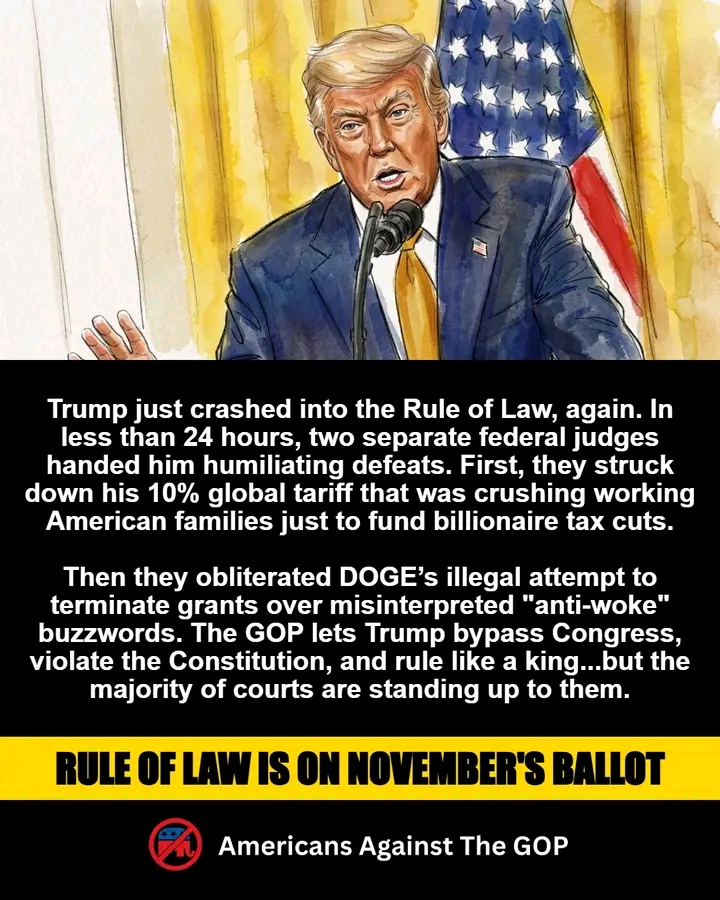
RULE OF LAW IS ON NOVEMBER’S BALLOT
Donald Trump faced a major legal and political setback this week after two separate federal court rulings delivered sharp rebukes to policies tied to his administration’s agenda.
The decisions reignited a national debate over presidential power, constitutional limits, and whether American institutions can withstand increasing political pressure heading into the next election cycle.
The first ruling targeted Trump’s proposed 10% global tariff plan, a policy critics argued would have raised costs on everyday goods for American families while benefiting wealthy corporations and high-income tax policies.
Federal judges questioned the legal authority behind such sweeping economic action without broader congressional approval, marking a significant challenge to Trump’s aggressive use of executive power.
Hours later, another federal court blocked efforts connected to DOGE-related grant terminations that opponents say relied on vague and politically charged “anti-woke” interpretations.
Judges warned that federal agencies cannot selectively punish organizations or revoke funding based on unclear ideological standards. Civil liberties groups praised the decision as a defense against government overreach.
Together, the rulings represent more than isolated legal defeats. They symbolize a growing institutional clash between Trump-aligned political forces and the judiciary. Critics accuse Trump and Republican allies of attempting to sideline Congress, weaken checks and balances, and normalize executive actions that stretch constitutional boundaries. Supporters, however, argue Trump is challenging entrenched bureaucracy and using executive authority to push policies voters support.
The courtroom defeats have intensified discussion about the future of American democracy. Legal scholars note that federal courts increasingly serve as the final barrier against controversial executive actions, especially in an era of heightened political polarization. The cases also underscore how judges — including some appointed by conservative administrations — continue asserting judicial independence despite political pressure.
As the nation moves closer to November, many voters see the battle as larger than one politician or one party. The central question becoming clearer is whether Americans still believe in institutional guardrails designed to prevent any president from governing without limits.
For opponents of Trump, the rulings are proof that the Constitution still works.
For supporters, they are another example of courts interfering with elected leadership. Either way, the message from the judiciary this week was unmistakable: presidential power is not unlimited, and the rule of law remains a defining issue in America’s political future.

Gas prices rise as questions mount over transportation leadership priorities, sparking public debate on focus, accountability, and whether officials are fully engaged in managing America’s critical infrastructure systems effectively today.

Outcry erupts over reports of possible ICE presence at polling places ahead of midterms, with critics warning it could intimidate voters and spark major legal challenges over election integrity and rights.

Federal judges dealt Trump two major defeats, blocking controversial tariffs and grant terminations, intensifying the national battle over executive power, constitutional limits, and the future of democracy before November’s election.

ONE LAST HOLY WAR FOR THE HEART OF COUNTRY MUSIC”: THE SEVEN GREATEST LEGENDS — WILLIE NELSON, DOLLY PARTON, GEORGE STRAIT, ALAN JACKSON, BLAKE SHELTON, LUKE BRYAN & TRACE ADKINS — UNITE IN A PASSIONATE, SOUL-SHAKING FIGHT TO PROTECT THE DYING SPIRIT OF TRADITIONAL COUNTRY

🚨 Texas ignites nationwide controversy after Governor Abbott signs sweeping measures targeting extremist-linked religious compounds and land control, sparking fierce debate over national security, constitutional rights, religious freedom, and America’s political future.
THE NEW WORLD ORDER — U.S. Moves to Withdraw 100,000 Troops from Europe and Halt Trillions in Defense

🚨 Fictional War Scenario “Chaos on the Frontline” Depicting 15,000 American Troops Surrendering Triggers Intense Debate Online Over Military Readiness, Cyber Warfare, Leadership Failures, and the Future of Modern Combat 🚨

THE ULTIMATE FINAL WAR FOR THE SOUL OF COUNTRY MUSIC: IN A HISTORY-MAKING MOMENT

🚨 Former Officials Sound Alarm Over Emergency Powers as Fears Grow That Hidden Executive Orders Could Reshape American Democracy and Expand Presidential Authority Beyond Constitutional Limits

🚨 Texas Sparks National Outrage After Governor Abbott Signs Explosive New Law on Land Ownership and “Parallel Societies,” Triggering Fierce Constitutional Debate, Massive Political Backlash, and Support From Conservative Leaders Nationwide 🇺🇸

Trump’s bold decision to release the UFO files marks another step toward government transparency and toring trust with the American people.
