
NEWS
🚨 Former Officials Sound Alarm Over Emergency Powers as Fears Grow That Hidden Executive Orders Could Reshape American Democracy and Expand Presidential Authority Beyond Constitutional Limits

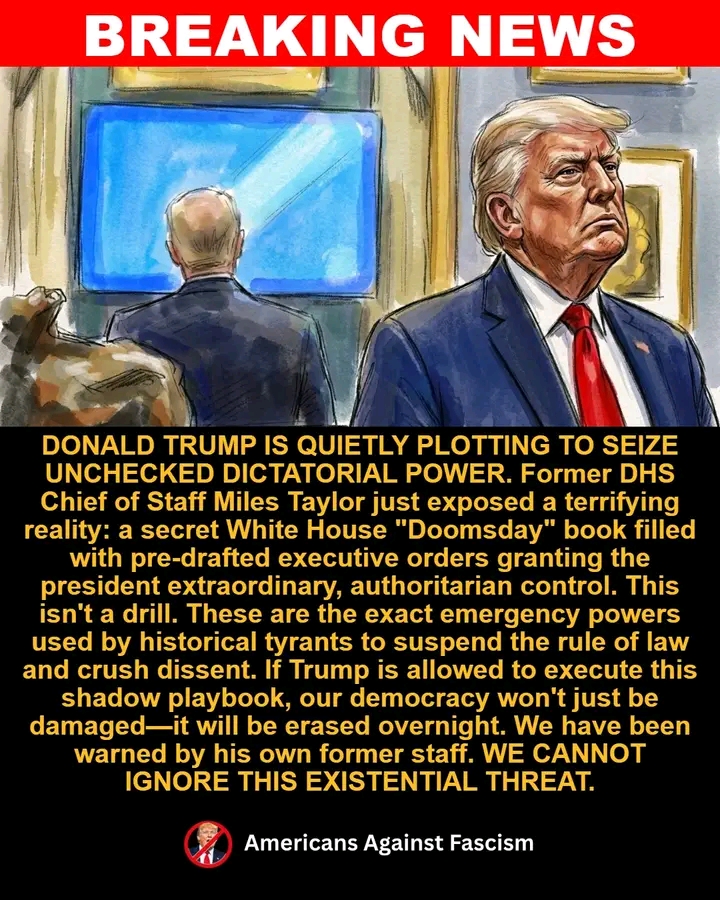
Hidden Powers and Growing Fears: Why Warnings About Emergency Executive Orders Are Sparking National Debate
Across American history, moments of crisis have often tested the limits of presidential power.
Wars, terrorist attacks, economic collapses, and national emergencies have repeatedly pushed leaders to take extraordinary action in the name of protecting the country. But recent claims from former officials about secret pre-drafted executive orders are now raising a far deeper concern: could emergency powers be used to fundamentally reshape American democracy itself?
The controversy intensified after reports surfaced that extreme executive orders designed for catastrophic national emergencies may already exist within the federal system, ready to be activated under certain conditions.
According to critics, these provisions could potentially allow a president to bypass Congress, expand federal authority, deploy military resources domestically, and temporarily suspend normal democratic processes during a declared crisis.
While supporters argue that every government must prepare for worst-case scenarios, opponents fear that such powers could be dangerously abused if placed in the hands of a leader willing to stretch constitutional boundaries.
The warnings carry additional weight because they are reportedly coming from people who once served inside the Trump administration itself.
Former officials and advisers have publicly expressed concerns that emergency powers could become a legal pathway for unprecedented executive control if political instability or national unrest were used to justify extraordinary measures.
For many historians and political analysts, the fears echo troubling moments from the past. One comparison repeatedly being raised is the collapse of Germany’s Weimar Republic during the 1930s. Historians note that democratic institutions there were not destroyed overnight through a military coup.
Instead, emergency powers were gradually expanded through legal mechanisms after periods of unrest and instability. Civil liberties were suspended step by step until authoritarian control became normalized.
Critics argue that this historical lesson matters because modern democracies often rely heavily on leaders respecting unwritten norms and limits, not just the exact wording of laws.
When emergency powers become too broad or lack strong oversight, they can create opportunities for abuse regardless of political party.
At the center of the debate is a critical constitutional question: how much authority should a president have during a national emergency?
The U.S. government already grants presidents significant emergency powers under existing laws. These authorities were originally designed to allow rapid responses during wars, terrorist threats, pandemics, or catastrophic disasters.
However, civil liberties advocates warn that vague definitions of “national emergency” can open the door for executive overreach if safeguards are weakened.
Supporters of stronger executive authority argue that modern threats require fast and decisive leadership. They believe bureaucratic delays during national crises could put millions of lives at risk. But opponents counter that concentrating too much power in one office creates dangers that may outlast the emergency itself.
The growing political divide surrounding these concerns reflects a broader anxiety about the future of American institutions. Trust in government, the media, elections, and the judicial system has sharply declined in recent years, making debates over executive authority even more explosive.
Some legal scholars warn that the real danger may not come from one dramatic moment, but from gradual normalization. If citizens become comfortable with expanded emergency powers during one crisis, future leaders may find it easier to use those same powers again under less extreme circumstances.
Ultimately, the debate is no longer only about one president or one political movement. It is about the balance between security and liberty, and whether democratic systems can maintain constitutional limits during periods of fear and uncertainty.
As the discussion intensifies, Americans from across the political spectrum are being forced to confront a difficult but necessary question: when governments gain extraordinary powers during emergencies, who ensures those powers are eventually surrendered?

🚨 Former Officials Sound Alarm Over Emergency Powers as Fears Grow That Hidden Executive Orders Could Reshape American Democracy and Expand Presidential Authority Beyond Constitutional Limits

🚨 Texas Sparks National Outrage After Governor Abbott Signs Explosive New Law on Land Ownership and “Parallel Societies,” Triggering Fierce Constitutional Debate, Massive Political Backlash, and Support From Conservative Leaders Nationwide 🇺🇸

Trump’s bold decision to release the UFO files marks another step toward government transparency and toring trust with the American people.

DONALD TRUMP UNLEASHES BOLD NEW POLICY BLUEPRINT TO PROTECT AMERICA: “WE WILL REFORM SOCIAL SECURITY, SECURE OUR BORDERS, AND LAUNCH AN ECONOMIC BOOM THAT WILL TAKE THIS NATION TO UNPRECEDENTED NEW HEIGHTS!” use

Breaking News : Donald Trump Draws a Hard Line Against the EU: July 4 Deadline Set as Tariff War Threat Looms Over Global Trade

Global Shockwave: Pete Hegseth Sends Cease-and-Desist to Pope Leo XIV — But the Pope’s Unbelievable Public Response Is What Has the Internet in Complete Meltdown”

Billions in Oil Trades Placed Minutes Before Major Iran and Trump Announcements Spark Explosive Insider Trading Questions, Fueling Demands for Investigations Into Who Knew What Before Global Markets Reacted

Travis Kelce and Taylor Swift Dazzle at Met Gala in “Sparkle Goddess” Looks, Sparking Viral Frenzy and Wild Speculation Over a Surprise Announcement Fans Believe Confirms Long-Standing Rumors Online

Arnold Schwarzenegger’s Advise He Gave Chiefs TE Travis Kelce Going Forward In His Hall Of Fame Career: “You can continue on, winning another super bowl. What else are you going to do right? Winning another super bowl that’s What it is. as a matter of fact, why not another one after that? There should be no stopping in sight.”

Taylor Swift and Travis Kelce Shock Fans With Emotional 2026 Met Gala Announcement as Cheers Erupt Worldwide, Sparking Massive Reactions Over Their Heartwarming New Chapter Together and Unforgettable Red Carpet Moment 💍✨

“Taylor Swift’s Viral Met Gala After-Party Dance Sparks Internet Meltdown as Fans Clash Over ‘Embarrassing’ Moves”
