
NEWS
Vornado CEO Steven Roth sparked outrage after comparing “tax the rich” rhetoric to a racial slur, insisting billionaires deserve praise while Americans struggle with rising costs, inequality, and economic frustration nationwide.

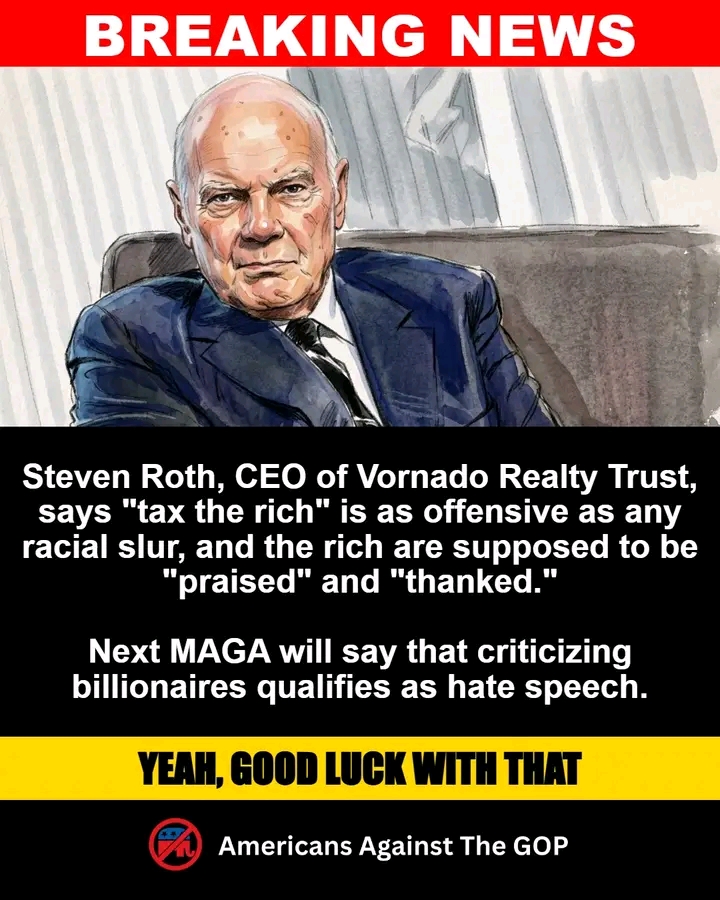
GOOD LUCK WITH THAT: Billionaires Want Praise While Working Families Struggle
Steven Roth, the billionaire CEO of Vornado Realty Trust, sparked outrage after claiming that the phrase “tax the rich” is as offensive as a racial slur and insisting that wealthy Americans should be “praised” and “thanked” instead of criticized.
The comments immediately ignited backlash online, with many Americans asking the same question: how disconnected from reality can the billionaire class become?
At a time when millions of working people are struggling with rising rent, inflation, healthcare costs, and stagnant wages, hearing a billionaire compare tax criticism to discrimination feels wildly out of touch. For many Americans, “tax the rich” is not about hatred. It is about fairness.
The frustration comes from a growing belief that the economic system increasingly benefits the ultra-wealthy while ordinary workers carry the burden. Large corporations continue reporting record profits while many families live paycheck to paycheck. CEOs receive massive compensation packages while workers are told to accept layoffs, reduced benefits, and higher costs of living.
Critics argue that billionaires already benefit enormously from public infrastructure, legal protections, taxpayer-funded services, and labor provided by everyday Americans. Asking the wealthiest individuals to contribute more in taxes is viewed by supporters as a reasonable expectation, not an act of persecution.
Roth’s remarks also highlight a larger cultural divide in America. Many wealthy elites see criticism of extreme wealth as envy or hostility toward success. But many working-class Americans see it differently. They are not angry that people become rich. They are angry at a system where wealth often translates into political influence, tax loopholes, and unequal power.
The debate over taxing billionaires is likely to intensify as economic inequality continues to grow. Politicians on both sides of the aisle are already battling over whether the wealthy pay too much, too little, or their fair share. But one thing is certain: comments like Roth’s are unlikely to win sympathy from Americans struggling to afford basic necessities.
For critics, the message from billionaires demanding “praise” instead of accountability only reinforces the perception that the ultra-rich are increasingly detached from the realities facing ordinary people.

Vornado CEO Steven Roth sparked outrage after comparing “tax the rich” rhetoric to a racial slur, insisting billionaires deserve praise while Americans struggle with rising costs, inequality, and economic frustration nationwide.

Pastor Robert Jeffress claimed Trump understands the Bible better than the Pope, triggering backlash from critics who argue Trump’s behavior contradicts core Christian teachings about humility, compassion, honesty, and forgiveness.

Reports claim Special Counsel Jack Smith holds unreleased Trump evidence and may make it public despite political pressure, reigniting fierce national debate over accountability, transparency, and whether any leader stands above the law.

Should Pramila Jayapal be charged with violating the Logan Act for having conversations with the ambassadors of Mexico and other countries to try and undermine the Trump administration? Yes or No?
Trump’s appointment of MAGA influencer Nick Adams as a Special Presidential Envoy sparked widespread backlash, with critics arguing America is rewarding political loyalty over experience, professionalism, and diplomatic credibility.

THE KING STRIKES BACK: GEORGE STRAIT A COUNTRY MUSIC UPRISING THAT’S SHAKING AMERICA TO ITS CORE

WESTMINSTER IN TURMOIL: THE STATEMENT THAT SHOCKED THE NATION!

Gas prices rise as questions mount over transportation leadership priorities, sparking public debate on focus, accountability, and whether officials are fully engaged in managing America’s critical infrastructure systems effectively today.

Outcry erupts over reports of possible ICE presence at polling places ahead of midterms, with critics warning it could intimidate voters and spark major legal challenges over election integrity and rights.

Federal judges dealt Trump two major defeats, blocking controversial tariffs and grant terminations, intensifying the national battle over executive power, constitutional limits, and the future of democracy before November’s election.

ONE LAST HOLY WAR FOR THE HEART OF COUNTRY MUSIC”: THE SEVEN GREATEST LEGENDS — WILLIE NELSON, DOLLY PARTON, GEORGE STRAIT, ALAN JACKSON, BLAKE SHELTON, LUKE BRYAN & TRACE ADKINS — UNITE IN A PASSIONATE, SOUL-SHAKING FIGHT TO PROTECT THE DYING SPIRIT OF TRADITIONAL COUNTRY
