
NEWS
Breaking News : Donald Trump Draws a Hard Line Against the EU: July 4 Deadline Set as Tariff War Threat Looms Over Global Trade

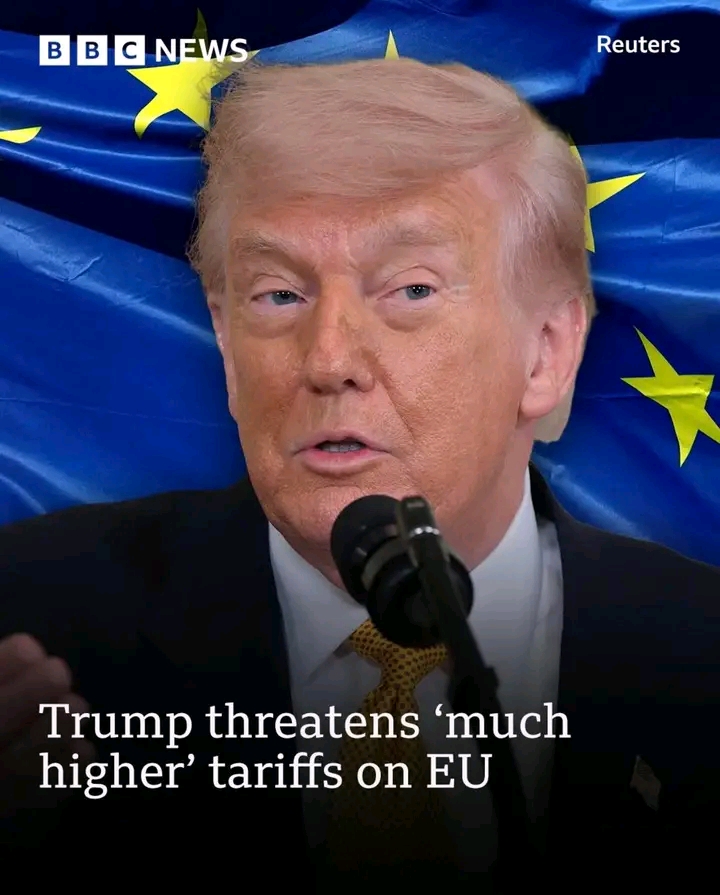
Tensions between the United States and the European Union are heating up once again after President Donald Trump issued a dramatic warning to EU leaders: eliminate tariffs on American goods by July 4, or face what he described as “much higher” tariffs from the United States.
The announcement has already sparked intense reactions across political and economic circles, with many warning that another trade war between two of the world’s biggest economic powers could send shockwaves through global markets.
According to Trump, the European Union has treated American businesses unfairly for years through what he calls “unbalanced trade practices” and heavy levies placed on U.S. exports. Speaking during a campaign-style appearance, Trump argued that American companies have been forced to compete under unfair conditions while European products continue flowing into the United States.
The proposed July 4 deadline — a date loaded with patriotic symbolism in America — appears to be a calculated move aimed at putting maximum pressure on the EU.
Trump insisted that if European leaders refuse to reduce their tariffs to zero, the United States would respond aggressively with even steeper import taxes on European goods.
The statement immediately reignited memories of previous trade battles during Trump’s presidency, when tariffs were imposed on steel, aluminum, automobiles, and several consumer products.
Those disputes strained relationships between Washington and European capitals and caused uncertainty for manufacturers, exporters, and investors worldwide.
Economists are now warning that escalating tensions could increase prices for consumers on both sides of the Atlantic. Industries such as automobiles, agriculture, technology, luxury goods, and energy could all feel the impact if negotiations collapse.
European officials have yet to fully respond, but insiders suggest the EU is unlikely to accept demands under pressure without negotiations.
Some leaders within Europe reportedly view Trump’s threat as an attempt to force concessions ahead of major political and economic discussions.
Supporters of Trump argue that his aggressive stance is necessary to protect American workers and industries. They believe stronger tariffs could force trading partners to offer fairer deals and bring manufacturing jobs back to the United States.
Critics, however, say the strategy risks damaging international alliances and could trigger retaliatory measures that hurt businesses and consumers alike. Many fear a prolonged standoff could weaken already fragile global economic stability.
As the July 4 deadline approaches, the world will be watching closely to see whether the United States and the European Union can avoid another major trade confrontation — or whether a new tariff war is about to begin.

Breaking News : Donald Trump Draws a Hard Line Against the EU: July 4 Deadline Set as Tariff War Threat Looms Over Global Trade

Global Shockwave: Pete Hegseth Sends Cease-and-Desist to Pope Leo XIV — But the Pope’s Unbelievable Public Response Is What Has the Internet in Complete Meltdown”

Billions in Oil Trades Placed Minutes Before Major Iran and Trump Announcements Spark Explosive Insider Trading Questions, Fueling Demands for Investigations Into Who Knew What Before Global Markets Reacted

Travis Kelce and Taylor Swift Dazzle at Met Gala in “Sparkle Goddess” Looks, Sparking Viral Frenzy and Wild Speculation Over a Surprise Announcement Fans Believe Confirms Long-Standing Rumors Online

Arnold Schwarzenegger’s Advise He Gave Chiefs TE Travis Kelce Going Forward In His Hall Of Fame Career: “You can continue on, winning another super bowl. What else are you going to do right? Winning another super bowl that’s What it is. as a matter of fact, why not another one after that? There should be no stopping in sight.”

Taylor Swift and Travis Kelce Shock Fans With Emotional 2026 Met Gala Announcement as Cheers Erupt Worldwide, Sparking Massive Reactions Over Their Heartwarming New Chapter Together and Unforgettable Red Carpet Moment 💍✨

“Taylor Swift’s Viral Met Gala After-Party Dance Sparks Internet Meltdown as Fans Clash Over ‘Embarrassing’ Moves”

Donald Trump has mastered the art of global attention through his unforgettable expressions, bold speaking style, and iconic hand gestures. Love him or criticize him, his unique communication approach has made him one of the most instantly recognizable and talked-about political figures in modern history and digital media culture.

JUST IN: President Trump threatens Iran that the U.S. will target power plants and bridges if regime doesn’t agree to the administration’s proposed deal.

🚨 MIAMI FALLS: Federal agents stormed a $12 million mansion and uncovered an alleged cartel-linked police empire involving Sheriff Antonio Vargas and 21 officers. Prosecutors claim millions in cash, narcotics, leaked witness files, and secret operations exposed one of the largest corruption scandals in modern U.S. history.

Beberapa orang Amerika percaya negara itu akan berada dalam posisi yang jauh lebih kuat hari ini jika kepemimpinan yang berbeda berada di Gedung Putih. Banyak pemilih frustrasi dengan harga naik, masalah perbatasan, konflik asing, dan arah bangsa. Yang lain sangat tidak setuju dan terus mendukung kebijakan mereka. Di mana pun Anda berdiri secara politik, satu hal yang jelas — orang Amerika bersemangat tentang masa depan negara dan siap untuk membuat suara mereka didengar. Apa yang anda pikirka?
