
NEWS
Trump political base sets aside isolationism to cheer Maduro capture

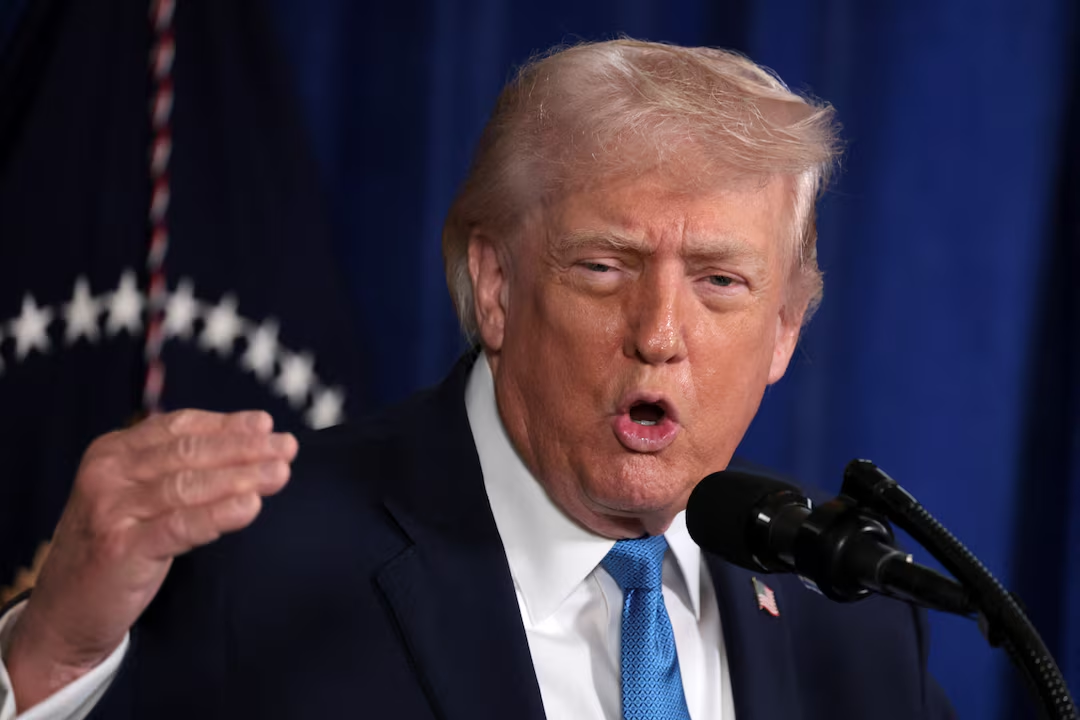
For years, “America First” was built on a clear promise: stay out of foreign entanglements, reject endless overseas conflicts, and pull the United States back from global power struggles. Isolationism wasn’t just a talking point—it was a core identity for Donald Trump’s political base.
Now, that identity is cracking.
The capture of Venezuelan strongman Nicolás Maduro has triggered an unexpected reaction inside Trump’s own movement. Instead of caution, restraint, or skepticism, the response from large sections of his base has been celebratory—loud, emotional, and unapologetic.
Cheers erupted across conservative media spaces, social platforms, and political rallies. The message was unmistakable: this one felt different.
But why?
Supporters argue Maduro wasn’t just another foreign leader. To them, he symbolized authoritarian socialism, regional instability, and a direct threat to U.S. interests in the Western Hemisphere. His capture is being framed not as foreign interference, but as a necessary strike against a dangerous regime. In their eyes, this wasn’t nation-building—it was justice.
Critics see something far more alarming.
They warn that the applause reveals a deep contradiction at the heart of the America First doctrine. If isolationism collapses the moment a foreign adversary falls, was it ever truly a principle—or merely a convenience? The shift raises uncomfortable questions: Where is the line now? Who decides which interventions are acceptable? And what happens when the next “exception” appears?
Even more striking is the speed of the transformation. Voices that once condemned foreign involvement are now defending it with moral certainty. The rhetoric has changed from “stay out” to “this had to be done.” That pivot suggests not just a tactical adjustment, but an ideological fracture.
Inside Republican circles, the tension is growing. Traditional hawks see this moment as proof that American leadership abroad still resonates—even with an audience long thought hostile to intervention. Isolationist purists, meanwhile, are warning that the movement is drifting toward the very foreign-policy mindset it once rejected.
At the center of it all stands Trump himself—largely silent, yet looming over the moment. Whether this reaction was anticipated or not, it places him at a crossroads. Does he lean into the applause and reshape America First into something more flexible, more aggressive? Or does he risk alienating parts of his base by reaffirming isolationist restraint?
One thing is clear: something fundamental has shifted.
The cheers for Maduro’s capture weren’t just about one man or one country. They marked a moment when ideology bent under pressure—and possibly broke. What emerges next could redefine not only Trump’s movement, but the future direction of U.S. foreign policy itself.