
NEWS
Sanctity of Life Front and Center as Trump State Department Rewrites Human Rights Rules

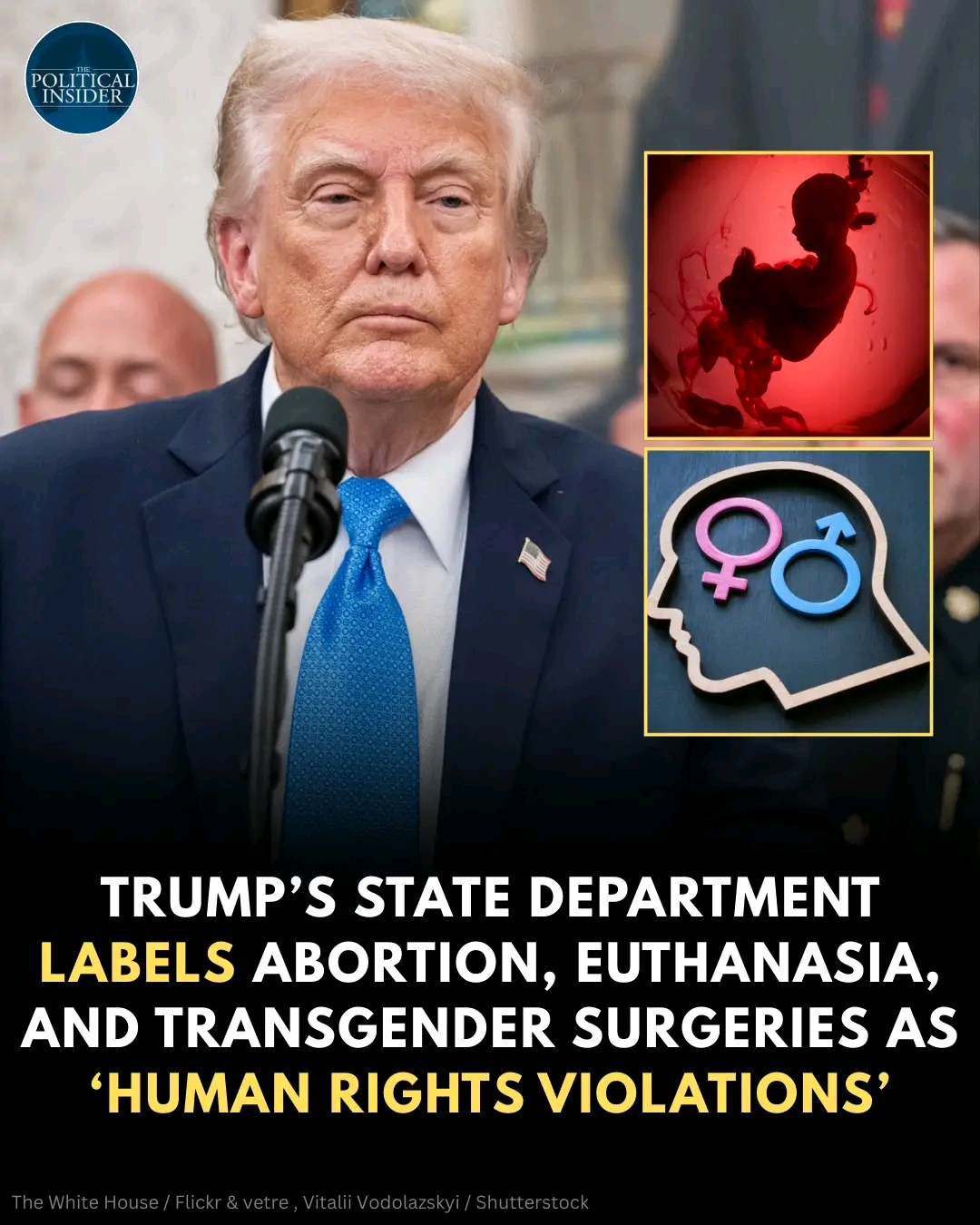
The Trump administration has taken a decisive and controversial step in reshaping how the United States defines and evaluates human rights around the world. In a major policy shift, the State Department has expanded the scope of its annual human rights reports to explicitly address issues such as abortion, gender-affirming surgeries, and euthanasia, placing what officials describe as the “sanctity of life” at the center of U.S. foreign policy.
Supporters call the move long overdue. Critics argue it politicizes human rights. Either way, the change marks a clear departure from previous administrations and signals a broader cultural and moral realignment in American diplomacy.
—
What Changed in the Human Rights Reports
Traditionally, U.S. human rights reports have focused on issues such as political repression, freedom of speech, religious liberty, unlawful detention, and abuses by authoritarian regimes. Under the new directive, State Department officials are now instructed to scrutinize national policies on abortion access, euthanasia laws, and gender-transition procedures, particularly those involving minors.
Administration officials say these practices raise fundamental human rights concerns that have been ignored or normalized by international institutions and progressive governments.
According to senior State Department sources, the expanded criteria are meant to “restore moral clarity” and challenge what the administration views as the global export of radical social policies under the banner of human rights.
—
A Clear Break From the Left’s Approach
The shift represents a sharp rebuke of progressive frameworks that treat abortion and gender-affirming medical interventions as settled human rights issues. Trump administration officials argue that labeling such practices as rights silences debate, dismisses ethical concerns, and marginalizes cultures and nations that reject them.
Particular attention is being placed on gender-transition surgeries and medical interventions for minors, which the administration says raise serious questions about consent, long-term harm, and medical ethics.
On abortion and euthanasia, officials emphasize the rights of the unborn, the disabled, and the elderly—groups they argue are often excluded from human rights discussions altogether.
—
Global and Domestic Reactions
International reaction has been mixed. Conservative governments and pro-life organizations have praised the move, calling it a necessary correction to ideologically driven human rights standards. Progressive advocacy groups and some U.S. allies have condemned the change, accusing the administration of imposing American cultural values on the world stage.
Domestically, the move energizes Trump’s political base, reinforcing campaign themes centered on protecting life, parental rights, and national sovereignty over global bureaucracies.
—
Why This Matters
Human rights reports are not symbolic documents—they shape foreign aid decisions, diplomatic pressure, and international accountability. By redefining what constitutes a human rights violation, the administration is signaling that future U.S. engagement will be guided not just by political freedoms, but by moral and ethical judgments about life itself.
—
A Broader Cultural Signal
More than a policy adjustment, this shift reflects a broader philosophical stance: that human rights begin with life and that not every social trend qualifies as moral progress.
Whether praised as courageous or criticized as controversial, one thing is certain—the Trump State Department has redrawn the human rights map, and the global debate is far from over.
👉 Share this article to join the conversation on how human rights are defined—and who gets to define them.

Wygrała mecz, ale wszyscy mówią o jednym. Sensacja w boksie Igi Świątek! Brak kluczowej osoby

Siedem goli, i ten cios w 88. minucie! Dramat Realu Madryt w hicie Ligi Mistrzów

Przeciek z “Farmy”. Farmer Tygodnia złamał regulamin

Pożegnanie trenera Magiery. “Jacek nie odszedł. On tylko zmienił sektor na trybunach”

Zwrot akcji w relacji ambasadora USA z Czarzastym. “Brawo dla niego”

Niepokojące, co aktualnie dzieje się w PiS. Na antenie Polsat News padły stanowcze słowa

Wielki smutek Ewy Krawczyk po mężu: JA SIĘ MĘCZĘ…

Robot pogonił dziki w Warszawie. Nagranie z Polski podbija internet

Wiadomo jak dziś wygląda córka Agaty Mróz. Liliana właśnie skończyła 18 lat

Kopiczyński nie był jego ojcem, a zrobił dla Olbrychskiego coś niezwykłego. Te słowa zaskakują

Nawrocki uderzył w Tuska i Czarzastego. Zamieścił mocne nagranie
